About · One desk, Upper Manhattan
Every episode gets the same two ears, the same room and the same measured master.
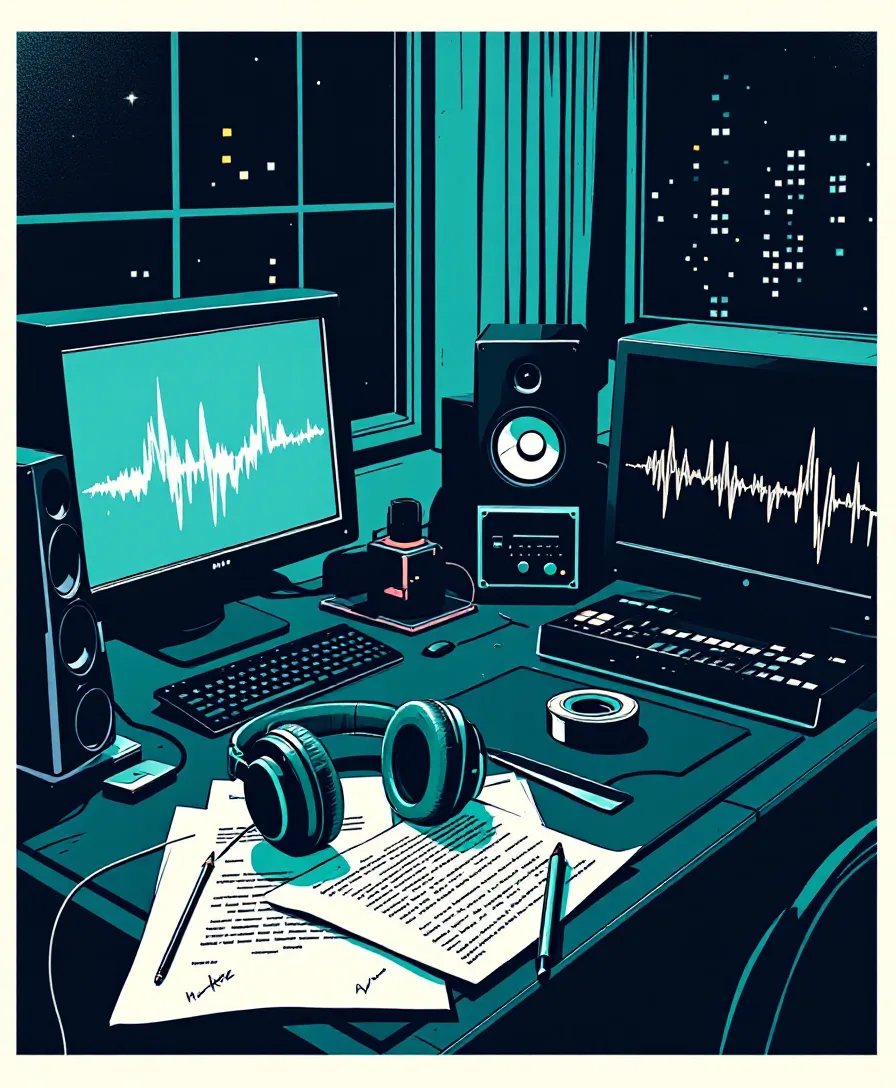
Raven Tinor is a single-desk post-production studio for narrative audio. Apartment 4H on Audubon Avenue holds the monitors, the treated corner and the signal chain, and nothing leaves the room without a loudness reading attached.
- Cold-case true crime
- Locked-room mystery
- Audio drama
- Serialized fiction
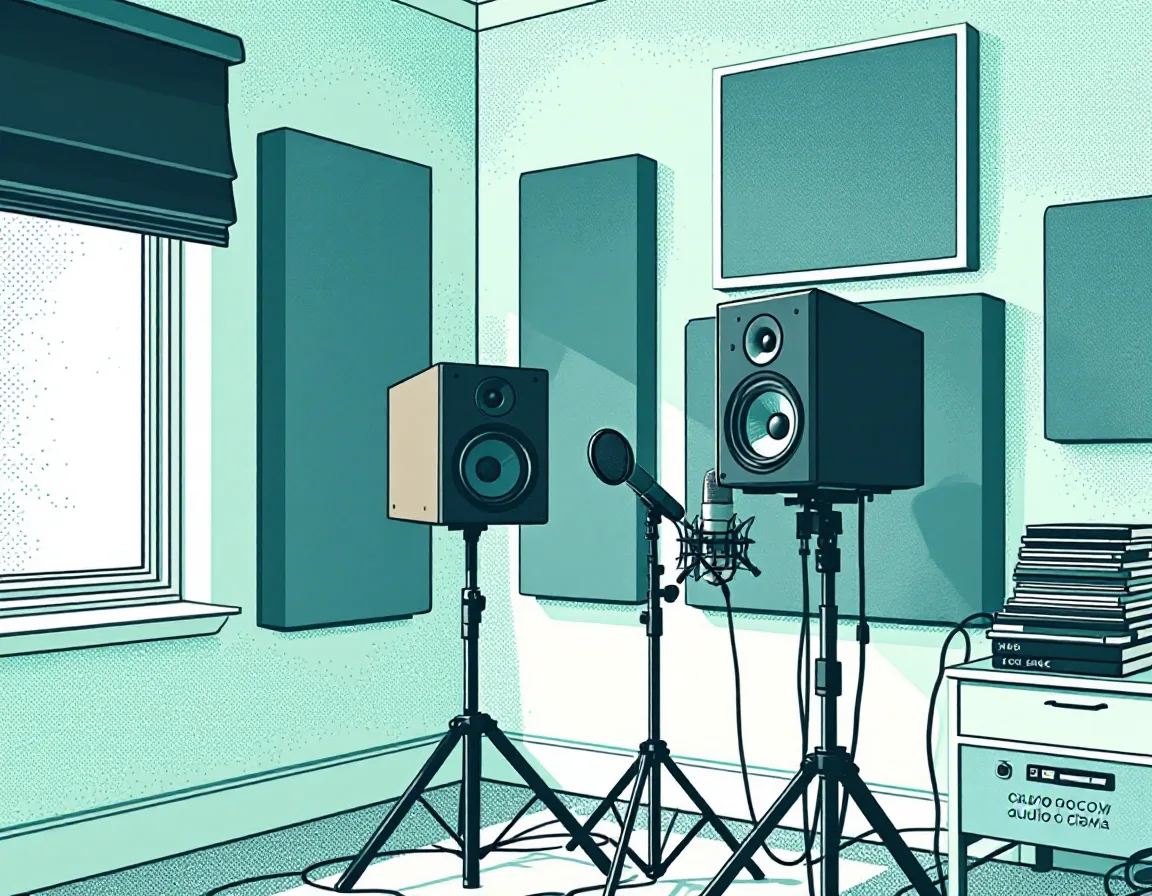
- Two nearfields
- Closed-back and open-back cans
- Phone-speaker check
- Car-stereo check
Origin of the desk
Built for listeners who press play in the dark.
Narrative audio lives or dies on small things: a breath left in the wrong place, a room that changes between two lines of the same scene, a music bed that fights the word “alibi.” Raven Tinor exists because independent producers write and record the story, then hand it to a mixer who has never heard it before.
A producer should be able to send a multitrack folder and get back a story, not a file.
The studio started as a spare-room desk edited around a day job, and it still runs the way a good edit suite should: one person reads your script, one person makes the cuts, and the same person checks the master on four playback systems before anything is delivered. Quotes are written per episode from the actual files, not from a rate card guess.
Most of the work is true crime, mystery and scripted fiction, genres where silence, ambience and restraint carry as much weight as dialogue. That’s the vocabulary the desk speaks.
House rules
Four rules, each one with a number attached.
Values are only useful if they can be checked. These are the ones the desk is measured against on every delivery.
-
01
If you can hear the edit, the edit failed
Room tone under every cutEvery cut gets matching room tone laid beneath it, and every splice is auditioned at normal volume and again with the ambience soloed. A gap between sentences should have a floor, never a hole.
-
02
One target, measured, not guessed
−16 LUFS · −1.0 dBTPStereo masters finish at −16 LUFS integrated with a −1.0 dBTP ceiling, mono feeds at −19. The final MP3 is measured again after encoding, because encoders add peaks that the WAV never showed.
-
03
Spoilers stay in the folder
Files deleted 30 days after deliveryUnreleased episodes are held on a single working drive, never shared outside the desk, and cleared 30 days after your final delivery unless you ask us to archive them. Mutual NDAs are signed on request.
-
04
Notes in timecode, answers in 48 hours
2–3 revision rounds included“Cut the second breath at 14:20” is a complete note. Each revision round is turned around within 48 hours, two rounds on a single episode and three on a mini-season.
The signal chain
What your episode passes through, in order.
Four stages, always in this sequence, so each decision is made once and stays made.
- Stage 1 · Intake
Spec check
Sample rate, clipping, dropped tracks and phase issues flagged the same day when files arrive before 4pm.
- Stage 2 · Edit
Dialogue pass
Clicks, plosives and crosstalk out. Narration and interview level-matched within 2 dB before any processing.
- Stage 3 · Design
Lanes and cues
Dialogue, Foley, ambience and music on separate lanes, with music sidechain-ducked and then hand-automated.
- Stage 4 · Master
Measure and ship
A/B against your reference, loudness-normalized, 24-bit / 48 kHz WAV plus a chaptered MP3 and a cue sheet.

Hand over the multitracks, get back a measured master.
Single episodes from $340, six-episode mini-seasons at $1,780. Tell us the runtime and episode count and a written quote follows within one working day.
The desk is open daily, 9am–4pm.